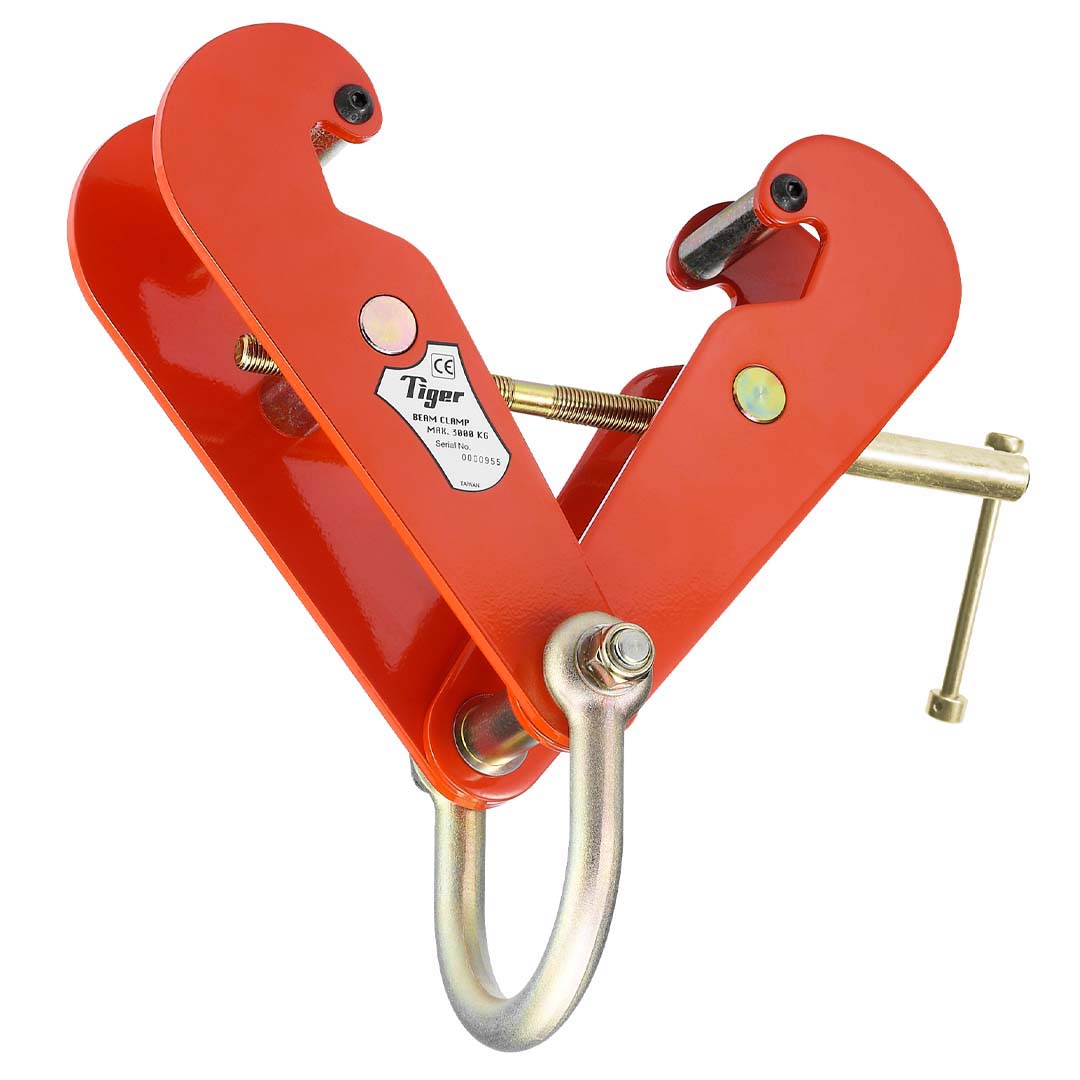
Take a look around any construction project, plant room, or warehouse in the UK, and you’ll notice steel beams everywhere. But have you ever wondered how equipment like hoists, pipe supports, or cables actually attach to those beams securely? The answer is often the beam clamp, a quiet but essential part of daily operations. If you choose the wrong clamp, you can end up with small annoyances—or far worse, a dangerous lifting problem.
In this easy guide, we’ll explore the main types of beam clamps used for support and lifting, see where they are most commonly found, and share simple advice to make sure you’re choosing and using them safely on site. By the end, you’ll be familiar with popular designs, everyday scenarios, and safety best practices when it comes to these hardworking pieces of kit.
Understanding Beam Clamps
Beam clamps, sometimes called girder or RSJ clamps, are devices that grip the flange of a steel beam without any need for drilling holes or welding. These are vital whenever a company needs a lifting point or a secure way to hang pipework or services from steel structure. Most lifting beam clamps use screws or gripping jaws to stay in place on the beam. A shackle or ring attached to the clamp then provides an anchor point for connecting things like hoists, lifting beams, or pulleys.
These clamps are often designed for classic beam profiles like RSJ, I-beam or H-beam, and find wide usage holding up electric hoists, chain blocks or even cable trays in both industrial and construction settings. They offer a solution whenever a permanent or heavy-duty anchor isn’t needed, and work just as well providing fixings for plant pipework or building services.
Why Clamp Type Makes a Difference
Every job involving steel beams is a bit different, and not all beam clamps are made for the same tasks. Some beam clamps are built purely for supporting fixed loads beneath a beam, while others are checked and certified for securely lifting actual beams in pairs. Using a clamp that’s only rated for securing pipes but employing it in a lifting task is not just unsafe, but also goes directly against safety rules in the UK.
Matching your clamp to the beam’s actual dimensions is crucial. Flange width, thickness, and even the subtle slopes on some beams can change what clamps will fit safely. And with rules like LOLER and PUWER in place, installers need to select clamps that carry proper approvals and that suit their load requirements and application.
The Main Beam Clamp Types
1. Fixed Beam Clamps
Fixed beam clamps are purpose-made for specific steel profiles or a narrow selection of sizes. Once fitted, they provide a sturdy, repeat-use attachment and shine in places where beam dimensions rarely change—think production lines, specialist factory hoisting stations or dedicated test setups. They typically include a threaded spindle and a steel eye for simple, strong, and clear fixing. Because they are tuned for known dimensions, fitting these clamps is quick and precise if you already know your exact steel size.
2. Adjustable Screw-Type Beam Clamps
Adjustable clamps are real favorites among constructors because of their adaptability. These use screws or sliding jaws, so you can open them up to fit various flange sizes, tighten them over the beam, and securely anchor a lifting point. They fit a far wider range of beams—ideal for equipment hire, site moves, or areas where many different types of steel shapes appear. You’ll easily find adjustable models that can handle loads from light installations all the way up to high capacity industrial lifts.
3. Universal (Girder) Clamps
Universal, girder, or multipurpose clamps are designed to excel in a range of lifting, pulling and support scenarios. Their flexible architecture allows them to deal with angled forces or loads—not just vertical pulls. Many types come with features like swiveling jaws or sideways-loading ability so they can be used even when spreader beams might otherwise be required. These clamps are especially handy in maintenance work, offshore projects, and wherever jobs change shape from day to day.
4. Top-Flange and Angle-Section Clamps
While most think of beam clamps as sitting under the beam, top-mount models grip the top flange. This means you can make a lifting point above and hang equipment below—useful in crowded or hazardous spaces to keep people safely out of the drop zone. There are also angle-section specific clamps, which are perfect for securing to steel angles used in roof spaces or light structural temporary builds.
5. Monorail and Construction Clamps
Monorail clamps are specifically designed for use as part of overhead transit systems—such as monorail or conveyor tracks. They let builders make adjustments in height and width to keep rails level. Because there’s no need for welds or hot work, these clamps are prized for their easy installation and re-use, which is ideal for frequent moves or adjustments.
Other Beam Clamp Varieties Out There
Some other widespread clamp styles you’ll likely come across include:
- C-Clamp beam clamps: These C-shaped steel fixings are tightened by a screw and generally provide suspension points for smaller loads like pipes or rods.
- Types by beam section: Some clamps are for the bottom flange, others are for gripping the top or, occasionally, the beam’s central connecting web.
- Modular systems: Brands make kit-based clamps to join steel beams together—no welding required—accommodating anything from flat to angled connections.
You’ll find that not every clamp can be used for lifting, so checking the manufacturer’s purpose and grading is essential.
Where They Are Used and What’s Changing
Beam clamps are common in UK fabrication shops, power stations, infrastructure projects, and marine engineering, helping users rig loads, set up hoists, or place lifters where full steel supports aren’t practical. Newer trends include corrosion-proof coatings for outdoor use, explosion-proof materials, and extra-compact designs. More companies are demanding that clamps show full third-party quality marks in addition to standard CE or UKCA logos for better traceability and safer use.
Safety Issues and Common Traps
A dangerous slip-up found on jobsites is using any clamp at hand and assuming it is rated for hoisting or dynamic (moving) loads. Many of the simple channel or C-clamps are only made to hold static fixtures and could fail with regular lifting use. UK rules say all beam clamps must be installed so they sit directly over the weight to be moved, and using more than one clamp for lifting a beam means you must ensure both are properly loaded and not overburdened. It’s also easy to misalign or overtighten, and exposure to rust or using uncertified hardware creates risks that continue to show up in accident records.
Looking Ahead: Improvements and Innovations
Using beam clamps wisely means simpler jobs, safer worksites, and the ability to shift lifting points as projects evolve. Fewer hot-works, easier adjustments, and simpler installations are benefits construction teams appreciate. Expect even more clamps for tight spaces, high-strength versions with less bulk, and improved compatibility across new modular systems and rails. Stronger regulations and operator training are also helping to lower the risk of lifting incidents.
Choosing the Right Beam Clamp: Quick Pointers
When picking a beam clamp in the UK:
- Measure precisely: Check the flange width, any slopes, and thickness, and choose a clamp designed for those conditions.
- Confirm the use: Know if you need it for static hanging or actual beam lifting—specific clamps are required for each.
- Check the load: Always verify the safe working load, consider multiple clamp setups, and inspect product markings.
- Match the environment: Go for corrosion-resistant, spark-proof, or specialty units if you are working outside or in hazards.
- Plan for mobility: If you’ll need to move the clamp frequently, adjustable or monorail options ease the process.
Be sure clamps are fitted according to the maker’s instructions and regularly inspected, always positioned straight above the load for maximum safety.
Beam clamps aren’t flashy, but they are a vital link between structure and safe lifting needs on sites of all types across the UK. Getting to know the full range of types—fixed, adjustable, girder-style, top-flange, and modular—sets you up to choose properly every time. By staying alert to details, picking trusted products, and following suitable guidance, you can enjoy all the flexibility of temporary anchors with none of the worry.